
Vermilion Ohio, A Good Place to Live

SHOPTALK: The maps on the desktops this week show the same place (beautiful downtown Vermilion) as it is today and as it was a century back.
Numerous changes have taken place over the years but, astoundingly, everything is by and large the same. I guess that’s what I really like about our town. The faces and names have changed, but many of places (at least externally) are much as they always were.
I have several other old maps of the town that I find interesting. The problem I have with them, however, is that while many of the shops are identified (i.e. saloon, grocery etc.) None of the owner names appear on them.
Well, wish in one hand…

DISCOMBOBULATED: For some unknown reason this week has put me off my game. I have a routine I generally follow day after day and there have been some disruptions therein.
First the weather put me of balance – the snow and cold. (I prefer warm and no snow days.)
Then there was follow-up work on the new boiler. We also learned that the warranty on the oil boiler had expired. This meant $$$. (The previous heat contractor was remiss in registering the system with the manufacturer.) The new boiler, however, is great.
Then two key people at the local supermarket that I’ve been working with, in conjunction with the Vermilion Food Pantry for years, are retiring. (And the “newbies” are truly “newbies”.)
But I did get my first Covid injection. (I had really hoped my wife and others had received theirs as well.)
And then I was notified that a video presentation I had been working on for the Ohio Museum Association (I’d forgotten about) was due. So, I was in what one might describe as a personal tither (which I also discovered is pronounced with a long “I” sound.)
Finally, I ran into an annoying password problem with my FTP (and another) app. Suddenly, they decided (as if they could decide anything) to deny my legitimate access to things I need to access. Darn!
But I persist. And next week things will be better. (I keep the faith.)
AND MUCH THANKS AGAIN & AGAIN: To all those folks who contributed to our cause during this terrible Covid thing. I want ye to know that your contributions have been extremely helpful. And when spring comes and we’ve all been inoculated, I am hoping to see each of you at the museum and thank you in person. So please stay well. And thank you, thank you, thank you.
Historically,


OHIO WINTER: If you live in a warmer climate this pic should make you cringe and be thankful that (for the moment) you don't live in N. Ohio.
This is a 360° pic taken on our porch on Thursday morning. It wasn't terribly cold. But it's getting there. The last several winters here haven't been bad so I have been spoiled - until now.
And then I remember returning home from Vietnam in February of 1967. In the span of about 36 hours I came from a wonderful tropical environment to a similar February morning in Ohio. I then don't think it so bad. It's just winter in Ohio.

AT THE THEATRE: There are over 30 videos / audios available at the theatre. I'm adding to the collection as the months pass. During the Covid (or anytime) - it's a good place to visit. I will be adding more this week. During this virus thing I've been learning a good deal about video productions.
I've not added anything for a time. But there's a good deal there to enjoy. Take a peek or two or three.

DO YOU HAVE SUCH THINGS AS THESE (?): Several years ago, I met a young man named Joe (that's a good name). He lives in nearby Wakeman, 0., but his life is rooted deep in Vermilion. He told me that his g-grandmother lived most her life in our town in a home on Exchange Street. At the time she was 98 or so, and she still lived on the same street - albeit a few doors south - at Mill Manor. Joe told me how his g-grandmother would tell him stories of long ago; when the trains used to stop at the stations and some of the unpaid passengers would debark to spend a day or two near the village. They would appropriate a few vegetables from the townsfolk, and toss them together in a pot to make a fine stew. They were only allowed to spend a few days here before being kindly persuaded to move further along the rails to another town. In any case, her stories so fascinated Joe that he had begun to develop an interest in history. Perhaps that is some of what grandparents are for.
Though I'm just kidding it seems a coincidence that my wife, Georgi, and I had just a week earlier conducted an interview with another 98-year-old citizen. And also, just as coincidental, during the interview this lady made a special point out of telling us that persons who have grandparents are very fortunate people. That was not, however, because she happens to be the matriarch of five generations of her family. It is because, she sadly sighed, "I only got to know one of my grandparents."
Unlike Joe or our interviewee, I never had the privilege of knowing any of my grandparents. (Darn!) On the other hand, I have found myself in a position where I have been able to get to know my ancestors, many of their friends, and a good deal about the lives they led through an ocean of photographs, books, and other documents they generated throughout their lives.
In the photographs made by my maternal grandfather I am able to see through his eyes the world in which he lived, and some of the people he knew. Because of his newspaper writings I have come to know his politics - though I might have committed the sacrilege of having occasionally been at odds with him. Yet, due to other records - both public and private - I have come to know, understand, and agree with my grandparents in all matters theological.
My maternal grandmother was a teacher: one of the youngest in Erie County back in the very late 19th century. Letters from a Sandusky attorney who was apparently responsible for hiring her to teach in the rural Berlin-Milan schools express much surprise at her demonstrative qualifications for the job at only the age of 21 or 22. But I have things that go back much further than these.
In the letters and books written by and to my ancestors - some reaching back as far as 1545 I am able to trace the family back to France when as Huguenots, they fled the country across the Channel to England. Coming to America on the ship “Increase” the family landed at Boston, the Massachusetts Bay Colony, in June of 1635.
During the American Revolution the family lived in a rural area of northwest Connecticut where the state borders Massachusetts and New York. It was called "The Oblong". The reason I mention this is because it would appear that they were Loyalists during the Rebellion. This factoid initially astounded me. But I reckon it shouldn't have. English law and taxes probably had little to no sway over the lives of many rural Americans in 1776. A rebellion would have likely seemed more of a nuisance than anything else. On the other hand, another one of my ancestors enlisted "in the service of his country" on July 5, 1775. So I guess it all balances out.
Well, I'm certainly happy that I have access to this ocean of information about my family. They seem like good honest folk: farmers, tailors, musicians, theologians, academics, surveyors, merchants, politicians, soldiers, musicians, carpenters, etc. But in the end, I regret not ever having known any of them. And though it may be that the young man named Joe that I recently met, has none of these things from the yesteryear, he had the one thing that's really important - his g-grandmother.
rnt February 1, 2021

YESTERYEAR'S NEWS: The following clips are dictated transcriptions from past issues of The Vermilion News. I think you will find them both interesting and fun...

St. Patrick’s Day will this year, come in Holy Week for the first time since 1856. This will not occur again until 1940. The earliest day upon which Easter now can fall is March 22, and the latest April 25. On account of the fact that St. Patrick’s Day this year comes between Palm Sunday and Easter Sunday, the most solemn period of Lent, celebrations in honor of St. Patrick’s Day will be postponed until after Easter.
The Vermilion Village Council held its regular meeting, Monday evening, with all members present and Mayor Wakefield in the chair.
After the reading and approval of the minutes of the previous meeting the regular business of the Council was taken up.
Several citizens were present. Wm. Boland asked why the name Vermilion was spelled with but one L on the fire hall, also why the sign Blattner’s dancing Academy sign appeared. He thought both wrong. He was informed that Vermilion was now spelled with one L, and is to be up to date, that was the way to spell it. Also, that Mr. Blattner had permission to place his sign up on the building as he had leased it for dancing.
The Street committee, D. Miller chairman, reported that the street terminus upon the river had been visited and examined, but that it would require a little more time to look after the matter, which was granted.
A communication from the Nickel Plate, was read, saying that they would not open Adam Street across their tracks unless compelled to do so. Immediate action was suggested, and it was decided to employ Henry Hart as attorney to look up the matter and see what necessary steps should be taken.
The clerk was instructed to note notify the L. S. & M. S. Company, that the grade of the sidewalk on Sandusky Street was not acceptable and it should be changed as soon as possible.
The public grounds committee reported that the storms that put an end to the matter of removing trees in the park, for the time being.
The sidewalk committee reported everything all right. The new snowplow made by Stevenson and Becker was doing the work acceptably and Perry Fast, with his horse had cleaned the walk of the last snow in about six hours.
In regard to the sewer question it was decided to have the plan submitted to the State Board of Health for approval before any action whatever is taken.
The mayor then announced that the street Commissioner would have to be appointed that night, as it was the last day on which the appointment could be made. He named Henry Schmoll, and announced that there were two other applicants, Wm. Boland and John Knott, Jr., and if the Council did not see fit to confirm the appointment, he would name each in their turn. After some argument pro and con in which it developed, that although Mr. Knott had performed his duties in a manner very satisfactory to the mayor and the majority of counsel, there were other conditions of which the mayor and the councilmen could not approve. Finally, a vote was taken, which resulted in a tie. The mayor exercised his right and cast the deciding vote in favor of Mr. Schmoll.
The report of the local board of health of the state board was read and placed on file.
After providing for payment of bills, council adjourned.
Henry Knott, former Vermilion resident, an engineer on the Lake Shore Railway was killed at Port Clinton, Saturday. He was taking a train to Cleveland from Toledo and had been having trouble with his engine. At Port Clinton he stopped and adjusted some parts and while boarding his engine was struck by a fast train and killed. Funeral service services were held in Vermilion Monday.
Joe Millis, of Vermilion, is having a difficult time in explaining to a jury in Judge Stroupe’s court, how he came into possession of a big red motorcycle, the property of a Lorain man, with whom he formerly associated.
Millis sought to prove that he has sufficient money with which to purchase such an expensive machine, but information he confided to Chief of Police Williams, following his arrest, did not coincide very well with statements made in court. – Elyria Tel.
BORN – to Mr. and Mrs. Thomas Borowsky, a son, Friday, January 31st.
BORN – to Mr. and Mrs. August Quesknefsky, a son, Thursday, Jan. 30, ‘13.
Frank Hurlburt left Friday for Detroit, where he has accepted a position with the Studebaker Automobile Co.
Mrs. John Nickel an aged resident of Elyria Street, was quite badly bruised by a fall down the cellar Monday afternoon. Fortunately, no bones were fractured.
Miss Addie Field spent Thursday with her brother Alfred, who was taken suddenly ill with typhoid fever while on a visit at the home of George Wittmer in Vermilion.
Upon investigation it has developed at the body of John Gresovitch of South Amherst had not been taken from the grave at St. Joseph’s Cemetery, as it had been reported.
Fred Zurcher is quite ill at this writing.
The condition of Mr. Henry Petty is somewhat improved.
Henry Schmoll had the misfortune to lose one of his team of horses last week.
Mr. Anson Peas [sic] has been confined to the house for the past couple of weeks.
Mrs. Strahle is reported well on the way to recovery from an attack of typhoid fever.
C. F. Decker has purchased a new Overland automobile and no doubt will throw his influence more than over ever toward “Good Roads” for Ohio.
Lent began yesterday.
H. H. Patton is spending the week at great Bear Lake, at Banker, Mich.
Alfred Fields of Amherst who is suffering from an attack of typhoid fever at the home of George Wittmer, State Street, is reported as doing well as can be expected. His parents Mr. and Mrs. Adam Fields of Amherst are here assisting in caring for him. The young man came to Mr. Wittmer’s about two weeks ago for a short visit and was taken suddenly ill and was unable to be removed to his home.
Norma Alheit daughter of Mr. and Mrs. C. Alheit is recovering from a severe attack of pneumonia.
Mrs. Eva Decker celebrated the eighty-seventh anniversary of her birth at her home on Exchange St., Sunday. Her sons and families and granddaughter and family being her guests during the day.
Capt. R. E. Byrnes of Cleveland who was shot down in his home by burglars Sunday evening, was well known among Vermilion captains and sailors.
[NOTE: The killer was one Frank E. Kinney. He was executed in the electric chair on 12 December 1913 for the crime. His body was unclaimed and interred in Columbus, O.]
Frank Northeim’s family are quarantined on account of one of the children having diphtheria. The school district No. 6 has also been closed.
John Portman was on the sick list last week.
Master Freddy Stick is absent from school this week because of sickness.
A system of speaking tubes was installed in the four rooms of the H. S. Building last week.
[NOTE: I’m not sure – but those may still be in that school which is currently owned and being restored by the Brownhelm Historical Society.]
Miss Flora Miller was called home last week on account of the illness of her parents.
Mr. Benjamin Sutlif [sic] and Leo E. Kamps of Crane’s Corners, spent Saturday afternoon at Lorain enjoying the roller skating at Glenn’s Beach. They spent Sunday in Elyria and Oberlin.
[NOTE: Ben’s last name was really spelled Sutilef. He was born in Indiana around 1896 and came to the Vermilion area with the Rev. and Mrs. Sprunger to live at their orphanage (Hope & Light aka. “Gore”) when very young. It was his testimony that eventually led to the downfall of that institution. He ran away and it became big news. The Kamps family lived near Crane’s Corners – the intersection of Cherry and Mason Roads. There was a schoolhouse on the corner – Crane’s School.
Henry E. Knott, son of John and Caroline Knott, was born in Vermilion, Ohio, on May 7th, 1876. At the age of 14, he was confirmed in the Reformed Church it’s Ceylon, O. He was married to Amelia Endle on the 29th day of December, 1899, at Berlin Heights, Ohio. Two children were born to them, Esther Lucille and Royal Endle.
For nine years he was an employee of a railroad being an engineer on the Lake Shore and Michigan Southern, for the last four years. While at his post of duty he met sudden death at Port Clinton, O., On Feb. 1st, by being struck by a train when he was about to get aboard his engine.
He died at the age of 36 years, eight mos. and 24 days, and leaves to mourn his untimely death, a wife, two children, ages 11 and 10 years, and aged father and mother, five brothers, John, Gottlieb, George, Otto and Charles, and two sisters Mrs. Anna Hoffman and Miss Margaret Knott.
Funeral services were held at the Vermilion Reformed Church, Tuesday, Feb. 4th at 12 o’clock, Rev. A.C. Pretzer, officiating. Interment at Maple Grove Cemetery.
He was a member of the Brotherhood of Locomotive Engineers, and representatives of that body were in attendance and acted as pallbearers. They also were especially kind and sympathetic to the bereaved ones. The floral offerings of this organization were especially beautiful.
The funeral was one of the largest in number of those in attendance ever held in this church, he and his family have many friends who are greatly grieved and shocked at his terrible death.
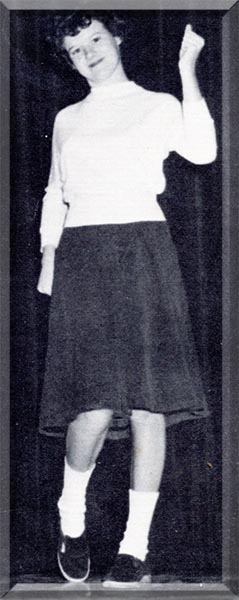
Mary Wakefield Buxton
Just outside of the town of Vermilion on the other side of the lagoons was a paradise waiting to be discovered. This idyllic, shady community of charming, white cottages tucked in amongst tall trees along the lake was known as Linwood Park. It was an area that had been built in earlier times by a religious group and it was very popular especially with families from Cleveland and Pittsburgh that came to Vermilion each summer to enjoy vacations in a more relaxed setting than city life offered. Many generations of the same families came to the park and often cottages passed down through families from generation to generation.
My first introduction to Linwood Park came in the 6th grade from my friend Polly Warner who often invited me for an overnight in her home in the lagoons. One winter evening she suggested we visit Linwood Park later that night after her parents had retired for the evening. Fun! We stayed up late until her parents had gone to bed and then ran over to the fence that separated the lagoons from the park and crept through a hole in the wire.
It was spooky as it was the dead of winter and there were no lights. Yet we walked along the pitch-black streets trying our best not to look frightened, which is certainly not the look a sixth grader would ever want to have, checking out all the cottages hoping one would have been left unlocked so we could peek inside.
Sure enough, we found one and quickly shoved open the creaky door to view a musty dark room with furniture completely covered in sheets. Of course, we heard what must have been a rat scurrying across the floor (but what we imagined was a madman waiting to capture little girls foolish enough to enter his domain) which terrified us and we ran screaming out the door and home to the lagoons.
Still, scary or not, a girl must experience adventure. I suppose I had inherited that streak for love of adventure as Father always told me he and his friends known as the” River Rats” (Alf Buell, Fred Wakefield, Art Copeland, Ted Wakefield and others) used to break into the fish house along the river and throw fish net buoys at any poor soul that was passing by.... Sneaking into an unlocked cottage doesn’t sound as bad as that and at my present age of 79 doesn’t sound as much fun as I thought it was at age 12... but then I considered the adventure a big thrill. Of course, our parents never heard about our midnight foray but even if they did, especially my father, would have understood how children must have a few such ventures to experience a normal childhood.
My next Linwood encounter came about after my parents decided it would be fun to rent a cottage at the park for a month one summer. I believe I was it was the summer I was about to enter the 7th grade at this time and sisters Alice and Georgia were 15 and 5 respectively. We had such fun meeting many of the “regulars” that summer. I remember sitting on the swing on the screened in front porch of our cottage and laughing with our many new friends.
One memory really stands out. Alice and I had been asked to play the parts of vestal virgins for a religious play that was to be held in the evening at the park chapel. We agreed but at that time we were both wearing what we thought very fashionable... leopard skin undies. Unfortunately, when we showed up for the play, we discovered our costumes consisted of gauze gowns tied with a sash. There was some later feedback that two of the vestal virgins in the group were wearing what appeared to be some strange animal print underclothing. To our dismay, even in the candlelight, the leopard spots stood out.
The next summer Father decided we would spend our annual two-week vacation at the Linwood Hotel, a rustic but charming white wood framed hotel of four floors and a large dining room and veranda filled with rocking chairs that faced Lake Erie. How we laughed at the thought that our family loved summer in Vermilion so much that we had decided to vacation at a local hotel instead of a faraway destination.
We had a great time as guests in the old hotel, tried every rocking chair, scooted up and down every staircase, went swimming every day in the lake and especially enjoyed Hanna Morey’s wonderful home cooked meals three times a day in the hotel dining room. It soon felt natural that Mother and Father went home every day to check the house and feed the dog. It was during such “vacations” that Alice and I noticed the splendid dining room staff and especially the fun that everyone seemed to be having on the job.
Alice got the first job the next summer, and, as usual, I wanted to follow in her footsteps. One day someone called in sick and they needed emergency help and Alice volunteered me. I was more than happy to join in on the good times. Mrs. Morey already knew what a good worker Alice was, and she had every reason to believe I would be equally responsible on her staff. I spent the next three summers working at the Linwood Park hotel.
The wait staff at the hotel were just one part of the youthful workers that helped keep Linwood Park going. We were joined by mostly college age boys who ran the gate supposedly stopping all traffic from coming into the park without a ticket. Most Vermilion teens had no tickets and would never think of purchasing one, (the hole in the fence was still there) but fortunately such generous gate keepers as Cricket Reed and Pete Shelton let us in anyway. Of course, Alice and I had to work three shifts a day, breakfast, lunch and dinner, commuting from our home on West Lake Road, serving the lovely guests who vacationed each year at the hotel. I remember the staff, especially Carolyn and Bob Blake, she, a fellow waitress and Bob, the dishwasher, Jeanie, Kay, Suzy and Bill Fussner who worked in maintenance in the hotel. One of his major morning tasks was to sweep out the sand from the beach that had accumulated in the hallway of each floor during the previous day.
Then, there was a staff that worked in the “stand” across the street from the hotel that sold snacks and hamburger fare. The stand was a favorite place to go in the park and I can still hear the screen door slam as I went in or out enjoying one of many hand scooped ice cream cones.
A few native families owned cottages in the park, one I remember was enjoyed my Tom and Lousie Williams and their children and the Seith family as I recall also had a cottage in the park.
The fun after work and between shifts is well remembered. One year a waitress by the name of Suzy who played the guitar led the group in singing fests on the beach each night in front of a fire made by driftwood assembled earlier that day. I learned all the songs and can still sing the words to such tunes as “It’s a Sin to Tell a Lie,” “Down by the Old Mill stream,” “Ain’t She Sweet, "and “Has Anybody Seen My Gal” which were popular songs in my parents’ generation.
Our so-called “work” was great fun. The first duty in the morning was to make the coffee in a huge urn in the dining room. Then we handed our menus to our guests that were assigned our tables (the hotel guests stayed at the same tables for the duration of their stay,) and took orders. Mrs. Morey was patiently waiting in the kitchen with other cooks who helped her prepare the meals and finally, we delivered them to the guests. We grew fond of our guests and looked forward to serving them on their return the next summer.
Mrs. Morey was a marvelous cook who brought her collection of delicious recipes to the hotel each summer. I can still remember the drop-dead taste of her homemade meringue with a scoop of fresh strawberries or red raspberries and whipped cream on the top. Hmmmm, so good!
Alice went to college the next year and became camp counselor in a New England camp the following summer, but I was happy to return to the Linwood Hotel. My final year, in 1959, the summer after I graduated from Vermilion High School, I lived in rooms reserved to house female summer staff on top of the stand. Today those rooms have been converted to hotel rooms and are quite nice but back then they were barely more than “cabin in the woods” style. We shared one communal bath area and there was no A, C., just windows that were kept wide open through all kinds of weather, rain or shine, when all we had to keep cool was a hoped-for breeze at night off the lake.
My roommate that summer was a girl named Sue from Pittsburgh and she was sick most of the summer. I would ask her if she needed anything before I reported to the hotel for breakfast duty, and she would groan in response. She finally left for her home leaving me without a roommate the remainder of the summer.
Every morning I went to work at the hotel across the street just as the chimes were ringing. I loved the Linwood chimes. In those early years they not only rang the hour of the day but also played hymns and other inspirational songs. Recent summers spent at a rented cottage in Linwood has assured me the park still plays chimes marking the hour but the wonderous songs of yesteryear seem to be gone.
Every paycheck went into buying clothes for college that would start for me that fall of 1959. I would hop on a Greyhound bus that stopped in front of the newsstand downtown, money in hand, and spend the day in Cleveland buying my new wardrobe for college. I was headed to a woman’s college in Virginia and for some odd reason I thought sophisticated sheath dresses and pointed high heel shoes not to mention English walking hats (with feathers) and tweed suits with velvet Chesterfield collars purchased at Peck and Peck and Bonwit Taylor in Cleveland would be the prefect look. It was not. Not only were tweeds, crew neck sweaters and plaid skirts too hot for the south in September, they screamed “Yankee” with every outing.
But that’s another story. In the years since the old Linwood Hotel burned to the ground and today only the remains of the curved drive within the grassy park are still evident. Every time I return to Linwood, I walk that same path from yesteryear from the stand to the ghost of the old hotel. And I am filled once again with memories of such happy summer days growing up in Vermilion, Ohio.
©2021 Mary Wakefield Buxton
[NOTE: MWB, who is currently in Florida, is doing a good deal of writing this winter on her memories of growing up in Vermilion. She has been made them available for use in VV. - Also note that while many persons thought the old hotel burned, it did not, but was torn down in 1965 - the same year the dance hall, Crystal Gardens, at Crystal Beach was also razed.]


THE VERMILION FLOOD PLAIN: While surfing through some old editions of a local daily I came across an article about the Vermilion Flood Plain that featured this map. I have the whole article - and will use it in a later publication. But I thought the map of some interest.






…of Mr. Parish's efforts at securing the liberation of fugitive slaves, has been fully stated in the United States law reports. There were but two suits brought to recover the value of escaping slaves, which arose from transactions in this county. One of these was brought against Mr. Parish and the other against Hon. Rush R. Sloane, and these it is proposed particularly to notice. From the Parish autobiography the following is taken.
"The question arose as to the relative merits and the tendency of the colonization and the anti-slavery societies, the latter of which was being organized in different localities in the free States. I had hitherto supported the colonization society, upon the assumed ground that it would lead ultimately to the abolition of slavery. But the discussion worked an entire revolution in my mind. I became thoroughly convinced that the tendency of the colonization scheme was only to add value to slave property by the removal of free laborers to foreign lands, and thereby strengthen and perpetuate the slave system in the United States. Consequently, I changed to an open and zealous hostility to that society, and became an advocate of the anti-slavery society.
"As the agitation of the question became general, violent opposition developed itself in all quarters. The abolitionists were not only opposed, but persecuted with great violence, both in church and state. The press, religious as well as secular, and literary institutions of the country, were so entangled and involved in the interests of the slave power of the land, that they at once combined in a general onslaught upon all abolitionists. All heartily joined in a common effort to overwhelm them, and if possible, to silence and suppress all discussion of the subject in compliance with the arrogant demands of the slave holders. Men of the highest respectability in the country were repeatedly subjected to mob violence, stimulated and encouraged by men of property and standing in the cities and in the country generally.
"Elisha Parish Lovejoy, publisher and editor of a religious paper, moderately advocating anti-slavery principles, first in St. Louis, then in Alton, III., was driven from place to place and finally murdered, and his press destroyed at the latter place. Not the least notice in law was taken of the outrage.
"William Lloyd Garrison, publisher and editor of the Liberator, was at one time dragged through the streets of Boston with a rope around his neck or body, by a furious mob composed (as was announced in the papers) of 'men of property and standing' of that city. Examples might be multiplied of similar mobs in other cities and towns.
"The press of the Philanthropist, early published in Cincinnati, O., was three times destroyed, to replace which I had the pleasure to as often contribute. For some time I stood alone in Sandusky as a known abolitionist, and for a time my person and residence were exposed to and threatened with mob violence.
"Abolitionists and some others helped along fugitive slaves in their flight…



THE TOBERMORY: Alice Wakefield sent me a recent cellphone pic of her late grandfather's yacht Tobermory. I just couldn't resist making it into a photo-painting. But the most interesting thing about the vessel is that it is 97 years old and still floating. Somewhere I have all the information regarding its construction. It really is astonishing.

"I'd like to buy some gloves for my wife," the young man said, eyeing the attractive salesgirl, "but I don't know her size."
"Will this help?" she asked sweetly, placing her hand in his.
"Oh, yes," he answered. "Her hands are just slightly smaller that yours."
"Will there be anything else?" the salesgirl queried as she wrapped the gloves.
"Now that you mention it," he replied, "she also needs a bra and panties."
.


LOCAL ANNOUNCEMENTS: After giving it much thought this link has been "put-down". During the last year most of the folks who used to use this page as a bulletin board have acquired their own and, consequently, no longer need this forum from "Views". I have, however, kept links (in the links section) to Larry Hohler's "Hope Homes" in Kenya - and to Bette Lou Higgins' Eden Valley Enterprises sites. They are historically and socially relevant projects. I suggest that you visit these sites on a regular basis to see "what's shakin'".

Persons interested in the history of the Lake Shore Electric Railway (which was the subject of a recent past podcast series) - "the greatest electaric railway system on the planet" may want to go to Amazon.com and purchase a book called "Images of Rail - Lake Shore Electric Railway". It was put together by Thomas J. Patton with the help of my friends DENNIS LAMONT and ALBERT DOANE. It'd make a nice gift.
Another great book with Vermilion Roots is, "Grandma's Favorites: A Compilation of Recipes from MARGARET SANDERS BUELL by Amy O'Neal, ELIZABETH THOMPSON and MEG WALTER (May 2, 2012). This book very literally will provide one with the flavor of old Vermilion. And ye can also find it at Amazon.com. Take a look.
DAVE’S NEW BOOK: Views readers might remember Dave Schwensen’s humor column, “Something To Laugh About” that ran in the Vermilion Photojournal, Sandusky Register and others. Dave has chosen 144 of the columns that he still thinks “are funny” and compiled them into his new book of the same name. It’s available through Amazon.com and other online sellers in paperback and eBook. If you’re interested in a signed copy click on Dave’s email @ DAVE.
To purchase the book on Amazon click here: SOMETHING TO LAUGH ABOUT
MARY WAKEFIELD BUXTON'S LATEST BOOK “Tripping: A Writer’s Journeys.” Signed copies of her new book can be purchased for $15.00 at the Southside Sentinel office or by mail by writing Rappahannock Press, Box 546, Urbanna, VA and adding $6.00 to cover mailing costs and tax. Contact:glongest@ssentinel.com.








THE BEAT GOES ON: This page is generated by a dreaded Macintosh Computer and is written and designed by (me) Rich Tarrant. It will change weekly ~ usually on Saturday. Bookmark the URL (Universal Resource Locater) and come back at your own leisure. Send the page to your friends (and enemies if you wish). If you have something to share with those who visit this page, pass it on. And if you see something that is in need of correction do the same. My sister, Nancy, is a great help in that respect. It only takes me a week to get things right. And follow the links. You might find something you like. If you experience a problem with them let me know. Also, if you want to see past editions of this eZine check the new archives links below.
If you're looking for my old links section (pictured) I've replaced it with a pull-down menu (visible in the small box next to the word "Go"). If you're looking for links to more Vermilion history check that menu.

How the old links menu looked

P.O. Box 437
Vermilion, Ohio
44089
Telephone: 440-967-0988 - Cell: 440-522-8397
or you can use PayPal: (NOTE: IT WORKS NOW)
Vol. 18. Issue 48 - February 6, 2021
Archive Issue #934
| advanced |
© 2017 Rich Tarrant