"
Rosedale:
From the outset I’ll make this as luculent as humanly possible. Swift’s Hollow, just south of Mill Hollow, is not haunted; there was no mean old man named “Gore” who ran an orphanage there; and no children died, or were buried, there after a fire or epidemic. What was there, however, was something so unusual and beautiful that photographs of it taken by an Elyrian, William Schiede, were once the focus of an architectural exhibit at the Smithsonian Institute in Washington D.C. It was called “Rosedale”.
During the War of 1812 a Williamstown, Massachusetts man named Joseph Swift enlisted, and spent two years in the American military. Afterward the government gave him 150 acres in the Western Reserve territory for his troubles. The land was fertile river bottom very much suited for farming. It was nestled in a wooded hollow some 7 miles south of the mouth of the Vermilion River.
Here Swift built a small home and got to the business of clearing the black walnut, cherry, whitewood, and oak trees to make room for crops. In short order his efforts were rewarded. Few ports on the lake were unfamiliar with Swift’s corn crops. Before long he purchased several hundred additional acres - including the high bluffs overlooking the hollow.
In addition to this the wealthy farmer also desired to have a house that would better reflect his good fortune.
Work by Elyria carpenter/builder, Mr. Lang, began in 1840. It took two years to build. A New York architectural firm designed it. In architectural text books the house is eminent because it was a fine example of early American architecture called the “Greek Revival Phase” (1800-1850). Four ionic columns decorated at the top graced the front of the structure. They had been transported by barge canal from New York State. Two large French decorated windows in line with the four columns at opposite ends of the front of the house were separated by a 35 by 10 foot porch. In the center of the porch stood the front door with two windows on each side.
The quality of the interior was no less exceptional. The framing timber came from the surrounding woods and was cut at the mill in Mill Hollow. The Whitewood planing material came from the mill of a Mr. Stiles of Cleveland.
At the back of the house was a covered piazza with smooth stone flooring in (again) an “L” shape. Here a lush flower garden afforded a southern atmosphere to the colonial structure. At the front lay the wonderful rosegarden which gave name to the Swift manse; Rosedale.
Aside from being an architectural wonder Rosedale also played an important role in the Underground Railroad during the American Civil War. The various barns about the property were used to quarter slaves awaiting passage to Canada in search of freedom.
The Swift Family sold the home in 1866 (PJ 1-23-03). In 1901 the place was essentially abandoned. Then in the early 1920’s when folks were just about to restore the home it was destroyed by fire. And all that is left is the foundation and a few stones scattered about the ground..."
Published in the Vermilion (Ohio) Photojournal on May 30th, 2005
In addition to this I also sent her an digi-pic of Joseph Swift (above) and a hand-tinted color photo of "Rosedale".




Dr. John Dickason
DOC DICKASON: I don't know much about Dr. Dickason. But he makes an appearance in several stories and photographs pertaining to old Vermilion, O. He was clearly a favorite of many folks.
He makes an appearance on page 10 in the late Vermilion historian George Wakefield's book Lure of the Lakes - A Taste of the Great Lakes telling George a comic story about the first meeting between Captain "Big Ed" Lampe and Vermilion's lovable, but well pickled fisherman, "Old Jib" Snider in Exchange Park.
He is a very frequent subject of Vermilionite Hank Fischer's reminisces of early times in Vermilion. And he can be found in old photographs taken in the back of Steve Martin's store where "the boys" gathered for their annual sauerkraut dinners.
But by all he is portrayed as a kindly, warm-hearted, intelligent, doctor with a good sense of humor who well understood the work and the lives of those about him.
The photograph (above) is c.1954. Dr. Dickason was innoculating youngsters in the gymnasium of South Street School for polio. The little boy is Robert "Buckie" Clark. But rest assured he wasn't hurting. He was just scared. The good doctor was exercising patience with his patient.


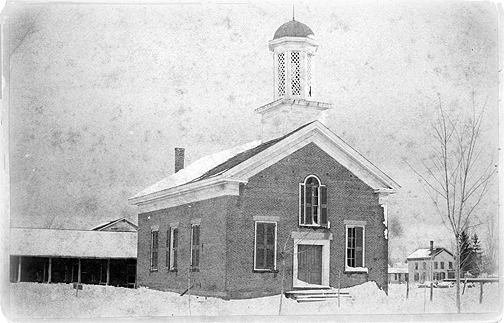
Vermilion's First Church
A REAL PHOTO: A facsimile of this photo has been applied in "Views" and elsewhere before. But this is (as they say) the real deal.
T'were actually a Presbyterian church that eventually became the Vermilion Congregational Church. The whole story can be found on the The History of Vermilion's Congregational Church webpage.
The church was located on or near the present site of Millet's Auction House on Main Street (just north of the old Vermilion Township Hall) in Vermilion. Many of the bricks used to construct the current building came from this structure.
The bell in this church was also "the real deal". It was cast in the Revere Foundry in Boston. Below is a pic of that bell. When the Congregation built a new church (c.1957) on State Street they left the bell behind. It was eventually sold to a party in California.
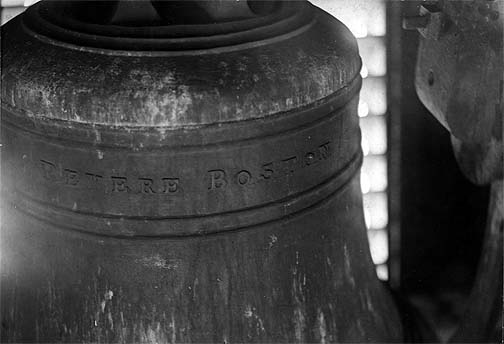
The Revere Bell
"Don't it always seem to go you don't know what you've got til it's gone?
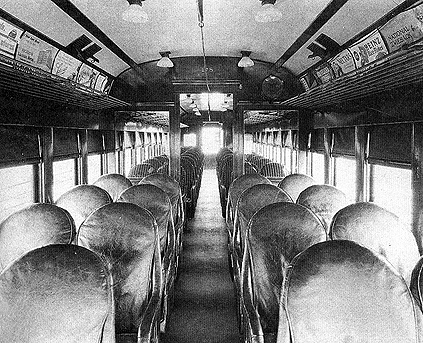
Inside a Lake Shore Electric car
A VIEW INSIDE: I have read and writ some descriptions of the interior(s) of the old Lake Shore Electric cars. And I have, before, featured some pix of those interiors as they look today in a museum. But this (again - and to be redundantly redundant) is "the real deal".
This was just a nice pic I took from some archives provided me by electric historian Dennis Lamont. And I thought it was interesting as well as informative.
Can ye imagine quietly (quiet being a rather relative term) clipping along the rails between Lorain and Vermilion at 55 or 65 mph in one of these cars? Had it not been for the big auto manufacturing interests married to money and politics we might have had a real class mass transportation system in America today.
Had this been the case we would have had no interest in places like Iran or Iraq. At least not like those we experience today.
C'est la guerre et malheureusement c'est la vie.


"Uncle Bud's" Book
PODCAST #61: This week the Vermilion Views Podcast #61 features Vermilionite Candy Schisler Fischer talking about her uncle, Warren "Bud" Haise. Mr. Haise, a farmer, was an interesting person who produced a little booklet (pictured) containing chestnuts of wisdom [i.e. "In this world, to more than get by,/ Be slow of tongue and quick of eye."] along with sundry bits of poetry he either wrote or collected during his years on earth.
Tis an interesting piece of americana I believe you'll enjoy.
For the benefit of all - kindly take note of the fact that I have produced an archive (that can be found in the "Links" section of the page) that will allow "Viewers" an easier way to access all past podcasts.
Note: (1)that the podcasts are in the archives; (2)that one can easily listen to them on-line and / or copy them (for free) to their PC or Mac for later listening; and (3) that all have also been preserved, by myself, on a separate hard-drive and on CD's. Anyone unable to listen to, or acquire the audios on-line and wishes to acquire a copy of any of these audio casts and / or recordings of persons who have spoken at a Vermilion Area Archival Society meeting during the last 12 months can do so by contacting me, and paying a small cover fee for recording materials.

LOCAL ANNOUNCEMENTS: Looking for the latest information about VHS Class Reunions, The Vermilion Area Archival Society, Eden Valley Enterprises events, and Hope Home in Kenya. Follow the link to the Vermilion Locals page. Something new (mit a few new pix added) for your enjoyment. Always
Incidently, "Viewer" Larry Hohler who is a big part of the Hope Home in Kenya wants folks to know that the children they are assisting are safe - midst the turmoil raging around them in that country. Methinks all "Viewers" should take a good look (go to the links section of "Views" for a virtual tour) at how the project really, really helps underprivileged children in this 3rd world nation. It is sincerely a worthwhile effort.







The Beat Goes On: The page is generated by the dreaded Macintosh Computer and is written and designed by (me) Rich Tarrant. It will change weekly ~ usually on Saturday. Bookmark the URL (Universal Resource Locater) and come back at your own leisure. Send the page to your friends (and enemies if you wish). If you have something to share with those who visit this page, pass it on. And if you see something that
is in need of correction do the same. My sister, Nancy, is a great help in that respect. It only takes me a week to get things right. And follow the links. You might find something you like. If you experience a problem with them let me know. Also, if you want to see past editions of this eZine check the new archives links below.
If you're looking for my old links section (pictured) I've replaced it with a pull-down menu (visible in the small box next to the word "Go"). If you're looking for links to more Vermilion history check that menu.

How the old links menu looked

For Persons who would like to donate to the cause (to keep these "Views" on-line you can send whatever you would like to me at the following address. And THANKS to everybody who has already donated to the cause. I doth certainly appreciate it):
Rich Tarrant
1041 Oakwood Drive
Vermilion, Ohio
44089
Telephone: 440-967-0988 - Cell: 440-522-4459
"I'm Bart Simpson, who the Hell are you?" -Bart Simpson
Vol.5, Issue 46, February 2, 2008


© 2007 Rich Tarrant